
- today
- label News
- favorite 0 likes
- remove_red_eye 571 views
- comment 0 comments
Supplements for dogs with food allergies – how to choose a safe product and where to buy it online
Food allergy in dogs is an increasingly common problem in veterinary practices. Itching, scratching, recurring diarrhoea and skin problems can seriously affect the quality of life of both the dog and its owner. The basis of treatment is always a properly chosen diet, but well-chosen supplements can genuinely support an allergic dog's body.
This guide was written for dog owners looking for safe supplements for dogs with food allergies who want to buy them online from a trusted source. It draws on current veterinary knowledge (AAHA and FEDIAF guidelines, the latest research) [1–12] and the practical experience of specialist shops such as bemopets.com, which work with sensitive dogs every day.
What are food allergies in dogs and what are the symptoms?
A food allergy is an abnormal immune system response to one or more components of the diet (most often proteins). It differs from food intolerance, where the body's reaction has no immunological basis (e.g. a lack of the enzyme that digests lactose).
The most common symptoms of food allergy
Typical symptoms include:
-
chronic or recurring itching (chewing the paws, licking, scratching the face or the area around the anus),
-
skin changes – redness, bumps, dandruff, hair loss, discolouration from licking,
-
recurring ear infections (inflammation, bad smell, head shaking),
-
digestive problems – diarrhoea, loose stools, bloating, sometimes vomiting,
-
poorer coat condition, weight loss, lethargy.
These symptoms can resemble other conditions (e.g. atopic dermatitis, parasites, bacterial or fungal infections), which is why food allergy cannot be diagnosed "by eye". Diagnosis under the supervision of a vet is essential.
The role of diet and supplements in food allergy
The elimination diet – the diagnostic gold standard
Current guidelines (including AAHA 2023) are unequivocal: the gold standard for diagnosing food allergy is an elimination-provocation diet, not blood or saliva tests [1],[2],[3],[10–12].
In practice, this means that for 6–8 weeks, or even 8–12 weeks for skin problems, the dog receives only a carefully selected food:
-
with a novel protein source (e.g. duck, rabbit, venison) that it has never eaten before, or
-
with hydrolysed protein (broken down into peptides), which is less likely to trigger an immune reaction [1],[3].
If the symptoms settle down after this period, a so-called provocation follows – a controlled return to the previous diet or the reintroduction of the suspected ingredient. If the symptoms return after the provocation, this confirms a food allergy.
Why can't supplements replace diet?
Supplements can:
-
soothe inflammation,
-
support regeneration of the skin and the gut barrier,
-
improve the dog's quality of life.
However, they cannot remove the cause of the allergy if the dog keeps eating what it is allergic to. That's why:
-
first – a properly conducted elimination diet,
-
only then – sensibly chosen supplements to complement the therapy.
Specialist shops such as bemopets.com bring together hypoallergenic food and carefully chosen supplements for allergic dogs in one place. This makes it easier to build a consistent feeding plan for a sensitive dog – without randomly mixing products of unknown composition.
The main types of supplements for dogs with food allergies
Omega-3 fatty acids (EPA/DHA) – anti-inflammatory and skin support
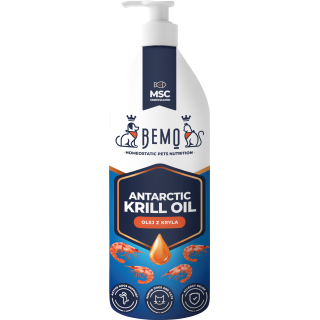
Omega-3 fatty acids (mainly EPA and DHA from fish oil or marine algae) are the best-researched group of supplements for dogs with allergic skin diseases [5–7].
How do they work?
-
they are built into cell membranes,
-
they "displace" arachidonic acid (omega-6), which is responsible for producing many inflammatory mediators,
-
they promote the production of pro-resolving compounds (resolvins, protectins), which calm inflammation [5–7].
What benefits can you expect?
-
less itching and milder skin lesions in some dogs with allergies / atopic dermatitis [5],[6],
-
better skin and coat condition (less dandruff and fewer dry, brittle hairs),
-
the possibility of reducing doses of anti-inflammatory drugs (after consulting your vet) [2],[6].
What to watch out for?
-
the effect usually appears after 6–8 weeks of regular use,
-
you need sufficiently high doses of EPA/DHA – the exact amounts should be set by your vet [5],[7],
-
it's worth choosing salmon oils and other sources of omega-3 for dogs with a declared EPA/DHA content per 1 ml / capsule and information on testing for heavy metals and dioxins.
Probiotics, prebiotics and postbiotics – the gut and allergy
A growing body of research points to a link between the gut microbiota and allergic skin diseases in dogs [8],[9]. Many patients with allergies or atopic dermatitis show so-called dysbiosis, i.e. a disturbed balance of gut bacteria.
Probiotics (specific, tested bacterial strains), prebiotics (e.g. FOS, MOS, inulin) and postbiotics can:
-
help restore healthy gut flora,
-
strengthen the gut barrier,
-
modulate the immune response – including allergic reactions [8],[9].
Reviews and meta-analyses show that probiotics can moderately reduce itching and the severity of skin lesions in some dogs [8],[9]. The best products clearly state:
-
the species and strain (e.g. Enterococcus faecium NCIMB…),
-
the minimum number of live cells (CFU) until the expiry date,
-
that they are intended specifically for dogs.
For allergic dogs, it is particularly important that the probiotic is not "chicken" or "beef" flavoured if those very proteins are suspected or excluded in the elimination diet. It's worth considering products from the probiotics and gut support for dogs category, where it's easier to find formulas suited to sensitive dogs.
Skin and coat supplements – the skin barrier
Many dogs with food allergies also have a damaged skin barrier – the skin is dry, flaky and prone to secondary infections. "Skin and coat" supplements usually contain combinations of:
-
fatty acids (omega-3 and often GLA – gamma-linolenic acid),
-
vitamins (A, E, B vitamins, biotin),
-
trace elements (zinc, copper, selenium).
Their job is to:
-
improve the structure and hydration of the skin,
-
speed up skin regeneration after damage,
-
reduce brittleness and excessive shedding of the coat.
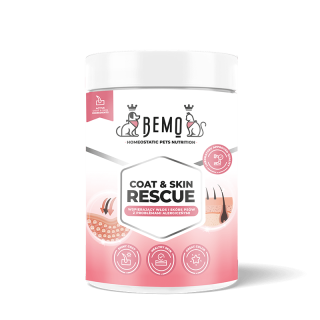
With an allergic dog, you need to be especially careful about flavourings – many products contain chicken hydrolysate, yeast or other proteins that may be allergens. So when choosing a skin and coat supplement for a dog with food allergies, aim for products from the skin and coat supplements for dogs category that have:
-
a simple, transparent composition,
-
no "meaty" flavourings or unnecessary taste additives.
Supplements supporting the gut and immunity
This group includes:
-
prebiotics and soluble fibre (e.g. psyllium),
-
yeast fractions (beta-glucans, MOS),
-
"immunity" products with antioxidants.
They can:
-
improve stool consistency in dogs that also have diarrhoea,
-
support local immunity in the gut,
-
reduce overall susceptibility to skin infections.
However, they don't "cure" allergies on their own – so they should be treated as an addition to the right diet and any drug treatment. When planning supplementation, it's worth turning to products in the dog immune system section, always choosing them in consultation with your vet.
How to choose safe supplements for a dog with food allergies
1. Always start by talking to your vet
Your vet will:
-
confirm or rule out a food allergy,
-
plan the elimination diet and future feeding,
-
tell you whether your dog really needs supplements and, if so, which ones and at what dose.
Juggling lots of products on your own often ends with worse symptoms and diagnostic chaos.
2. Read the labels – especially the protein sources
When choosing a supplement for an allergic dog, pay attention to:
-
the ingredient list – is it short and easy to understand?
-
protein sources:
-
avoid those your dog is allergic to or that have been excluded from the diet,
-
watch out for "hidden" proteins: hydrolysates, meat extracts, "natural flavour", flavoured yeast,
-
no unnecessary colourings or flavourings.
For a dog on an elimination diet, the ideal supplement contains as few foreign protein ingredients as possible – ideally none at all.
3. Check the quality and transparency of the label
Safe supplements for dogs with food allergies should:
-
clearly state the amount of active substance (e.g. mg of EPA/DHA, the CFU count of a probiotic),
-
include full manufacturer details and a batch number,
-
ideally come from companies that follow production standards (GMP, HACCP) and publish quality information (oil purity, probiotic stability) [4],[5],[8].
It's best to avoid products described only as a "blend of active ingredients" with no specifics.
4. Why buy from specialist shops such as bemopets.com?
Shopping on a large, general online marketplace can be tempting on price, but with allergic dogs, more than a discount is at stake. bemopets.com is a shop focused on mindful dog nutrition, with a particular emphasis on sensitive and allergic dogs. What does this mean for you as an owner?
-
A carefully selected range – the range is dominated by grain-free and hypoallergenic dog food, single-protein food and supplements for dogs with food allergies, chosen to best support dogs with skin and digestive problems.
-
Clear product descriptions – with detailed composition, purpose and directions for use, making it easier to fit a supplement into a specific feeding plan for an allergic dog.
-
A consistent range – it's easy to pick a base food and supplements that go with it (e.g. omega-3 for dogs, probiotics for the gut), instead of mixing random products from different sources.
For the owner of a dog with food allergies, this simply means less risk of getting it wrong and a better chance of effectively supporting your vet's recommendations.
The most common mistakes when giving supplements to allergic dogs
-
Replacing the elimination diet with supplements
Giving "immunity tablets" or "coat oil" without changing the food won't diagnose the allergy or remove the cause of the itching. -
Giving several supplements at once
If diarrhoea or worse itching appears, it's hard to tell which product caused it. Introduce only one new supplement at a time, with several weeks of observation. -
Flavoured products during an elimination diet
Meaty chews, functional treats or flavoured probiotics can completely undo all the effort put into the elimination diet [10–12]. -
Not controlling the dose and doubling up on ingredients
Example: a food with omega-3 + salmon oil + a "joint" supplement with an extra portion of EPA/DHA + a multivitamin. That's a quick route to excess fat and fat-soluble vitamins. -
Choosing products with an unclear composition
Supplements with a "secret blend of active ingredients" or no stated protein source increase the risk of allergic reactions and of no therapeutic effect. -
Not working with your vet
Experimenting with supplements on your own while also giving anti-inflammatory drugs can harm your dog or make follow-up test results harder to interpret.
Where to buy supplements for dogs with food allergies safely online?
How to recognise a trustworthy online shop
Before you add a supplement to your basket, check whether the shop:
-
provides full company details (VAT number, address, terms and conditions),
-
offers secure payments and an SSL certificate,
-
has customer reviews, ideally verified by independent systems,
-
provides detailed product descriptions (composition, use, purpose),
-
clearly explains its returns and complaints policy.
Specialist pet shops usually take more care when selecting their range. For allergic dogs, this is crucial – it's not only about safety, but also about making sure the products genuinely support your vet's recommendations rather than undermining them.
Why consider bemopets.com?
bemopets.com is a brand focused on high-quality dog nutrition, including for sensitive dogs and dogs with allergies and digestive problems. When it comes to supplements for dogs with food allergies, this brings several practical benefits:
-
you can put together a complete package in one place: a single-protein or hypoallergenic food and compatible supplements for allergic dogs,
-
the range focuses on function and composition, not just on trends or marketing slogans,
-
the product descriptions help you match a solution to a specific problem (e.g. skin support, gut support), which makes it easier to talk to your vet and plan treatment.
For you as an owner, this means it's easier to create a consistent feeding and supplementation plan, rather than piecing one together chaotically from random purchases.
A practical mini-guide: introducing a supplement to an allergic dog step by step
Step 1. Assess the needs
-
Write down all the symptoms (itching, diarrhoea, ear problems, skin changes).
-
Talk to your vet – ask whether supplements make sense, and which ones, for your dog, and at what stage of diagnosis/treatment.
Step 2. Choose the product
-
Agree with your vet on the main goal of supplementation (e.g. skin support, gut support).
-
Choose a supplement with a transparent composition, free from the allergens currently excluded from the diet.
-
Check the dosage on the label – is it given per kg of body weight?
Shopping at a specialist store such as bemopets.com makes this stage easier – it's simpler to find products that go with hypoallergenic food and the needs of a sensitive dog.
Step 3. Introduce it gradually
-
Start with a lower dose than the target (e.g. ½ dose for the first 3–5 days), unless your vet advises otherwise.
-
Watch your dog: stool consistency, intensity of itching, behaviour, appetite.
Step 4. Observe for 1–2 weeks
-
Keep a simple log: date, supplement dose, changes noticed.
-
Don't introduce any other new products during this time (food, treats, medicines – where possible), so you get a clear picture of the reaction.
Step 5. When should you stop the supplement?
-
if diarrhoea, vomiting or much worse itching appears – stop the supplement and contact your vet,
-
if the supplement shows no clear effect after several weeks (and your vet hasn't recommended longer use), consider a different product or strategy together.
FAQ – supplements for dogs with food allergies
Does every dog with a food allergy need supplements?
No. For some dogs, improvement comes from a well-chosen elimination diet and a hypoallergenic food afterwards alone. Supplements are an extra – it's worth introducing them when a vet or animal nutritionist sees a specific reason (e.g. chronic skin lesions, gut problems, a need to support the skin barrier or immunity).
Can I give my dog "human" omega-3 supplements?
Some products for humans can be used in dogs, but only after consulting a vet. You need to consider the EPA/DHA dose per kg of body weight, any additional ingredients (e.g. vitamin D, flavourings, a pork gelatine capsule) and the safety of long-term use.
How long should supplements be given to an allergic dog?
It depends on the type of supplement and the individual situation:
-
omega-3 fatty acids are often used long term,
-
probiotics – in cycles or over a longer period, if your vet recommends it,
-
"skin and coat" supplements – usually for several weeks up to a few months, until the skin is stable.
The length of supplementation should always be decided by a vet who knows your dog's medical history.
Are natural herbs safe for a dog with allergies?
"Natural" doesn't automatically mean safe. Many herbs can interact with medicines, put strain on the liver or worsen allergic reactions. That's why it's worth discussing any herbal product (even one available without a prescription) with your vet, especially for a dog already diagnosed with a chronic condition.
Can supplements replace anti-itch medication?
Usually not. Omega-3 fatty acids or probiotics can reduce the need for anti-inflammatory and anti-itch drugs, but they rarely replace them completely, especially in acute phases of the disease. Any change to or withdrawal of medication is always your vet's decision.
Summary
-
Supplements for dogs with food allergies can be a valuable support for treatment – especially omega-3 fatty acids, probiotics and products that strengthen the skin and gut.
-
For them to work, however, a properly conducted elimination diet and consistent avoidance of the identified allergens are essential.
-
A safe supplement has a transparent composition, a clearly stated dose of active substances and no common allergens in its flavourings.
When planning supplementation, follow your vet's recommendations and choose products from trusted sources – ideally specialist shops such as bemopets.com, which focus on quality ingredients and real support for sensitive dogs rather than "miracle" promises. That way, you increase the chances that supplementation will genuinely help your dog – without unnecessary risk.
Sources
[1] 2023 AAHA Management of Allergic Skin Diseases in Dogs and Cats Guidelines: https://www.aaha.org/wp-content/uploads/globalassets/02-guidelines/2023-aaha-management-of-allergic-skin-diseases-in-dogs-and-cats-guidelines/resources/2023-aaha-management-of-allergic-skin-diseases-guidelines.pdf
[2] Jackson HA, Conducting a successful diet trial for the diagnosis of food allergy in dogs, Veterinary Dermatology, 2024: https://onlinelibrary.wiley.com/doi/10.1111/vde.13274
[3] Bizikova P et al., Food Allergy in Companion Animals: Integrating Traditional Diagnostics with New Tools, Applied Sciences, 2026: https://www.mdpi.com/2076-3417/16/5/2169
[4] FEDIAF, Nutritional Guidelines for Complete and Complementary Pet Food for Cats and Dogs 2024: https://europeanpetfood.org/wp-content/uploads/2024/09/FEDIAF-Nutritional-Guidelines_2024.pdf
[5] Bauer JE et al., The Effects of Omega-3 Supplementation on the Omega-3 Index and Health Parameters in Dogs, 2024: https://pmc.ncbi.nlm.nih.gov/articles/PMC11545626/
[6] Marsella R et al., Effect of Omega-3 Polyunsaturated Fatty Acid Supplementation on Canine Atopic Dermatitis, Nutrients, 2024: https://www.mdpi.com/2072-6643/16/17/2829
[7] German AJ, Exploring the efficacy and optimal dosages of omega-3 supplementation for companion animals, Nutrition Research Reviews, 2023: https://www.cambridge.org/core/journals/nutrition-research-reviews/article/exploring-the-efficacy-and-optimal-dosages-of-omega3-supplementation-for-companion-animals/118271BA20C2863CF770CB7960145015
[8] Pacheco RCF et al., Probiotics as an adjunct in the treatment of canine atopic dermatitis: a systematic review and meta-analysis, 2025: https://pmc.ncbi.nlm.nih.gov/articles/PMC12417725/
[9] Tate DE et al., A Randomized Controlled Trial to Evaluate the Impact of a Novel Probiotic on Dogs with Allergies, Animals, 2024: https://pmc.ncbi.nlm.nih.gov/articles/PMC10854619/
[10] Tufts Petfoodology, Think Your Pet has a Food Allergy? Eliminating Mistakes in Elimination Diet Trials, 2022: https://sites.tufts.edu/petfoodology/2022/04/04/think-your-pet-has-a-food-allergy-eliminating-mistakes-in-elimination-diet-trials/
[11] Today’s Veterinary Practice, Performing a Diet Trial to Identify Food Allergies in Dogs and Cats, 2023: https://todaysveterinarypractice.com/nutrition/diet-trial-to-identify-food-allergies-in-dogs-and-cats/
[12] Today’s Veterinary Nurse, 5 Common Elimination Diet Trial Mistakes, 2020: https://todaysveterinarynurse.com/nutrition/5-common-elimination-diet-trial-mistakes/
Comments (0)